


Traffic Rules Have Changed in Slovakia: What Drivers, Pedestrians, and E-scooter Users Need to Know
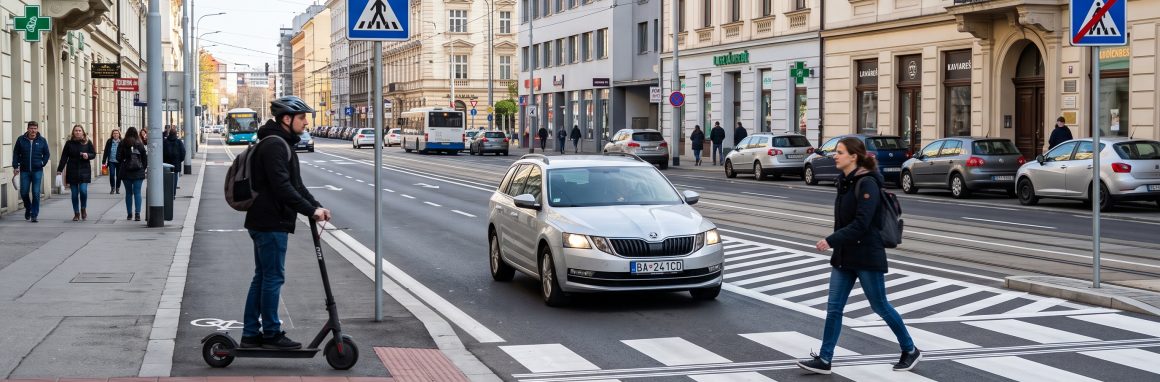
New traffic rules have been in effect in Slovakia since September 1, 2026. The changes affect virtually all road users: drivers, pedestrians, cyclists, electric scooter riders, and vehicle owners.
An amendment to the Road Traffic Act (Zákon o cestnej premávke) strengthens protections for pedestrians at crosswalks, restricts electric scooter use on sidewalks, increases fines for the most serious speeding violations, and expands strict liability for vehicle owners.
Some of the changes pertain to children on bicycles, repeat offenders, speed limits in pedestrian and school zones, foreign vehicles, and the collection of certain fines.
Let’s take a look at exactly what has changed and what rules you now need to follow on Slovakia’s roads.
Who Is Affected by the New Rules?
The amendment applies to:
- car drivers;
- vehicle owners;
- pedestrians;
- cyclists;
- children and their guardians;
- electric scooter users;
- users of Segways and other small electric vehicles;
- drivers who regularly commit serious traffic violations;
- driving schools;
- municipalities;
- owners of vehicles registered outside Slovakia.
Why Were the Rules Changed?
One of the main goals of the amendment is to improve safety for the most vulnerable road users.
According to data from the Slovak Ministry of the Interior, 65 pedestrians were killed on Slovak roads in 2025. In the first eight months of 2026, another 36 pedestrians were killed.
Therefore, one of the most significant changes specifically concerns the behavior of drivers and pedestrians near crosswalks.
This image was created using AI.
1. Drivers must be aware of pedestrians even before they step onto the crosswalk
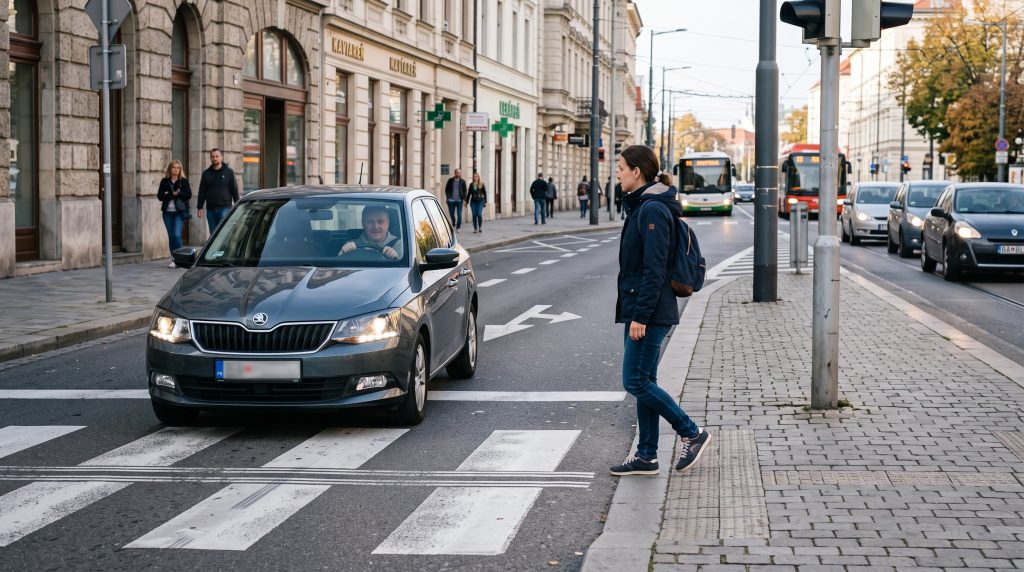
Starting September 1, drivers are required to ensure safe passage not only for pedestrians who are already on a crosswalk but also for those who are about to step onto it.
When approaching a crosswalk, drivers must adjust their speed so that they can stop the vehicle before reaching it if necessary.
There is also a separate rule for people with white canes: if a pedestrian using a white cane is approaching a crosswalk, the driver is always required to stop before the crosswalk.
However, the new rules do not give pedestrians unconditional priority regardless of the traffic situation.
Pedestrians are still required to:
- watch for traffic;
- be aware of the speed of oncoming vehicles;
- estimate the distance to them;
- avoid stepping onto the crosswalk suddenly.
In other words, the principle remains a two-way street: drivers must anticipate when pedestrians intend to cross the street, but pedestrians themselves are also required to make sure it is safe to step into the roadway.
2. You also can't use your phone at a crosswalk if it prevents you from watching the road
The amendment introduces another important rule for pedestrians.
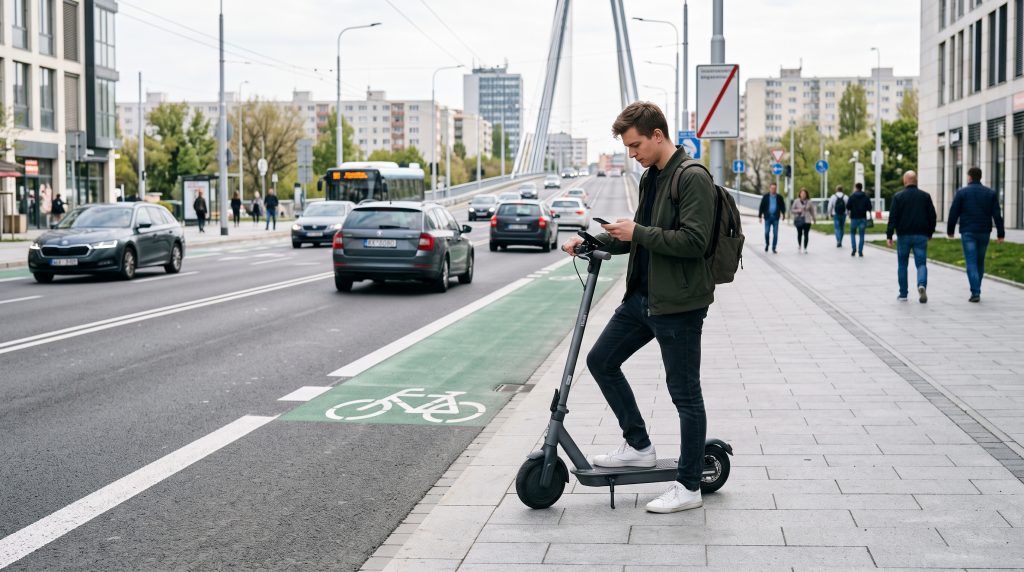
Before stepping onto a crosswalk and while crossing it, you must not use a phone or any other device in a way that impairs your ability to monitor traffic conditions.
This isn't about a complete ban on holding a phone, but specifically about situations where using the device distracts a person from their surroundings.
This image was created using AI.
3. Electric scooters are now restricted from riding on sidewalks
The rules for electric scooter users have also changed significantly.
Electric scooters are now prohibited from traveling on sidewalks unless such movement is expressly permitted by a traffic sign or by the applicable traffic arrangement.
Electric scooters, Segways, and similar devices fall under a new category of small electric vehicles.
Specific requirements have been established for them:
- the device must have a manufacturer's nameplate;
- the maximum design speed must not exceed 25 km/h;
- the vehicle must not be equipped with a seat;
- only persons 15 years of age or older may operate it on public roads.
Therefore, a regular sidewalk can no longer be considered a place where riding an electric scooter is permitted by default.
4. Children under the age of 15 are now allowed to ride bicycles on the sidewalk
For cyclists, on the other hand, the rules have become more lenient.
Until now, children under the age of 10 were allowed to ride on the sidewalk. As of September 1, the age limit has been raised: cyclists under the age of 15 now have this right.
There is also a separate provision stating that a child under 10 years of age may ride a bicycle when accompanied by a person over 15 years of age.
This change is intended to take into account the actual traffic conditions in cities and towns, where safe bicycle routes for children are far from always available.

This image was created using AI.
5. Fines for excessive speeding are now much stricter
For ordinary minor speeding violations, the fines have not changed.
The stricter penalties apply to the most serious cases:
- in a built-up area - exceeding the speed limit by more than 50 km/h;
- outside a built-up area - by more than 60 km/h.
Fines for these violations have increased under both procedures.
How is a violation handled?
| How the violation is handled | Previously | Since September 1, 2026 |
| Fine in summary proceedings / on the spot (blokové konanie) | 250-800 euros | 500-1,000 euros |
| Fine in administrative proceedings (správne konanie) | 500-1,000 euros | 800-1,300 euros |
Thus, the maximum administrative fine for the most serious speeding offense now amounts to 1,300 euros.
6. Four serious violations in a year - Your license will be suspended for at least three months
This amendment specifically imposes stricter penalties on drivers who systematically commit serious violations.
If a driver commits a fourth serious traffic violation within 12 months, their driving entitlement (vodičské oprávnenie) will be withdrawn for at least three months.
In addition, the driver will be required to complete:
- medical examination;
- psychological evaluation.
A special rehabilitation program for drivers is also being introduced and will be conducted by a psychologist responsible for the assessment.
In other words, for repeat offenders, the consequences are no longer limited to just another fine.
7. Car owners' liability has been expanded
Another important change concerns the so-called strict liability of the vehicle owner (objektívna zodpovednosť držiteľa vozidla).
It means that the vehicle owner is liable for an administrative violation related to the vehicle as provided for by law, regardless of who was actually behind the wheel.
In such cases, the police are not required to stop the vehicle at the exact moment the violation occurs. The citation and fine may be sent to the vehicle owner at a later date.
From September 1, strict liability also applies to:
- failure to maintain a minimum or safe following distance from the vehicle ahead;
- using a cell phone while driving;
- not wearing a seat belt in the front seat;
- driving in the oncoming lane.
Specific fines have been established for some of these violations:
| Violation | Fine |
| Using a cell phone while driving | 249 euros |
| Failure to wear a seatbelt in the front seat | 78 euros |
| Driving in the oncoming lane | 249 euros |
In practice, this means that in some situations, it will no longer be possible to avoid liability simply because the police did not pull the car over at the scene.
This image was created using AI.
8. The speed limit in pedestrian zones has been cut in half
Speed limits have also changed in certain urban areas.
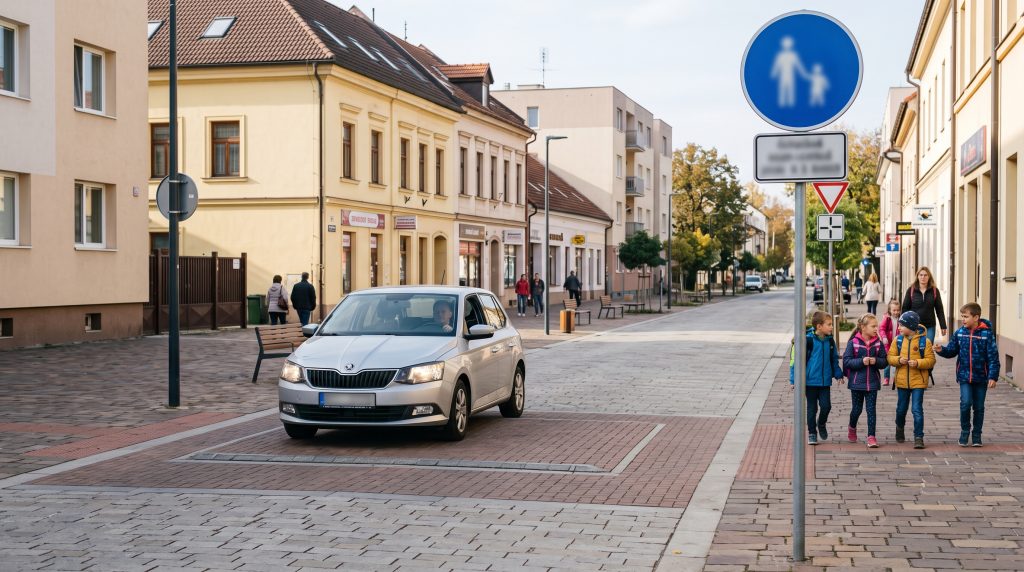
In pedestrian zones, a car or other vehicle permitted to enter by traffic signs may now travel at a maximum speed of 10 km/h.
Previously, the limit was 20 km/h.
In residential and school zones, the maximum speed limit is 20 km/h.
For comparison:
| Zone | Maximum Speed Limit |
| Pedestrian Zone for Vehicles Permitted to Enter | 10 km/h |
| Residential Zone | 20 km/h |
| School Zone | 20 km/h |
What else has changed?
The amendment isn't limited to pedestrians, scooters, and speeding tickets.
As of September 1, 2026, the rules will also change in several less noticeable but important areas.
More opportunities to work with vehicles registered abroad
Municipalities now have greater access to data on the owners of vehicles registered abroad.
This is important, among other things, for enforcing liability and collecting fines in cases where a vehicle has foreign license plates.
If certain fines remain unpaid, the vehicle may actually be impounded
If a driver fails to pay a fine on the spot for exceeding the maximum allowable vehicle weight, additional measures may now be taken.
Specifically, the following are permitted:
- seizure of vehicle documents;
- seizure of license plates;
- use of a technical device to prevent the vehicle from leaving.
In other words, the vehicle may effectively be prevented from continuing on its way until the situation is resolved.
The changes affect driving schools and driver's licenses
The amendment also modifies certain rules regarding:
- driving schools;
- driver's licenses;
- drivers who have been subject to administrative penalties on multiple occasions.
When the new rules took effect
All of the changes listed above take effect on September 1, 2026.
The announcement from the Slovak Ministry of the Interior does not specify any transition periods for the main rules described, so drivers, pedestrians, and other road users should take them into account starting now.